Luceda Photonics: real-world impact
When Luceda Photonics was founded more than a decade ago, few in Belgium were talking about startups - let alone about design software for integrated photonics. Yet from the labs of Ghent University, VUB and Imec, six people from very different backgrounds decided to take the leap.
Among them was Joris Geessels. He doesn’t describe himself as a born entrepreneur: “It happened a bit by accident. I was mainly looking for something technically interesting that could have real-world impact.” That curiosity still defines Luceda’s culture today.
From academic roots to entrepreneurial reality
Luceda started as a typical university spin-off – until the founders realised they needed to think beyond the university walls. “At the start, we still saw UGent and Imec as our main partners,” says Joris. “SO Kwadraat helped us see that we were the ones starting the company. That it was up to us to take ownership and look further than the academic environment.”
That early guidance was valuable precisely because it was neutral. “SO Kwadraat wasn’t an investor, so the conversations were open and low-threshold. They made us aware of potential pitfalls and helped us think independently.” He remembers their focus on ambitious but grounded projects: “They often coach teams who want to do something truly different – technologically challenging projects that aren’t necessarily big, but certainly not ordinary.”
A team built on complementarity
Luceda’s founding group was remarkably diverse: physicists, photonics experts, electronics engineers and software developers. “That diversity was our strength, even if we didn’t realise it fully at the time” Joris recalls. “We learned to appreciate people who think differently. That balance between scientific precision and software pragmatism still defines us.”
With six founders, aligning ambitions took time. “Finding the right dynamic was a challenge, but we shared one clear motivation: to create something technically challenging with tangible impact. That common purpose kept us together.”
Over the years, Luceda grew into a global company of around 45 people – about 30 in Belgium and more than 10 in China – while preserving its collaborative, research-driven spirit. When the company was later acquired by a larger Chinese electronics group, one key condition was non-negotiable: Luceda must remain Luceda. “Keeping our brand and autonomy was essential” says Joris. “We wanted to continue as a European team with our own values.”
Lessons learned – and relearned
Some advice from the early days only sank in years later. “We were told not to overestimate the value of the university software we started from – maybe even rebuild from scratch. We didn’t listen. Looking back, they were probably right. But some things you just have to discover for yourself.”
That experience taught the team the value of self-awareness. “Entrepreneurship isn’t only about technology or funding; it’s about understanding strengths and weaknesses – your own and those of the people around you. Appreciating different perspectives is harder than it sounds, but that’s what makes a team work.”
Growth as a continuous practice
More than ten years in, Joris still approaches building Luceda with the same mindset he started with: keep learning. He reads, asks questions and reflects on how people with different strengths look at the same goal. Progress, he says, doesn’t come from one type of founder, but from complementary profiles that strengthen each other – and from staying curious about your own blind spots.
The human side is inseparable from the technical one. In the beginning, the focus was on what to build – the software, the product. Over time, it became clear that how people work together is just as critical. Technology evolves and people grow; keeping both aligned is continuous, deliberate work – the kind of work that turns research into lasting impact.
Staying ambitious – and European
Luceda’s story reflects the evolution of Belgium’s startup scene: from a handful of university spin-offs to a globally connected deep-tech ecosystem. Joris sees plenty of potential for the next decade. “We can still be more ambitious in Europe. The talent and ideas are here – we just need to look beyond our borders and dare to tackle the difficult problems.”
For him, entrepreneurship was never about showmanship or quick growth. It was about building something meaningful together.
“I didn’t set out to be an entrepreneur” he says. “I just wanted to work on something ambitious, with people who care. That’s still what drives me – and, I think, what defines Luceda.”
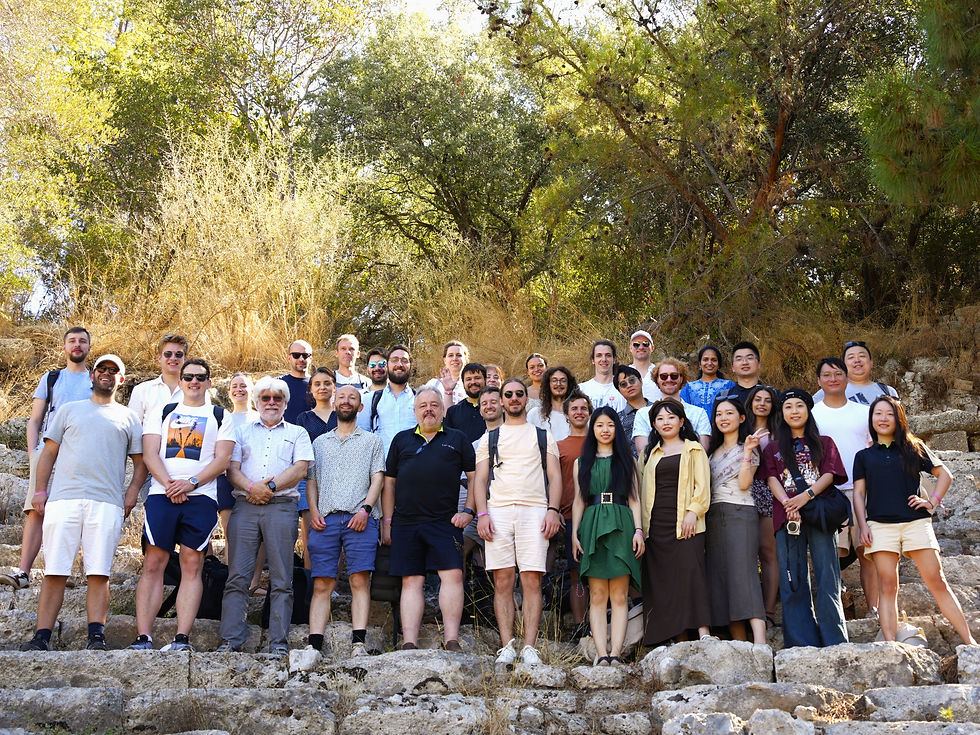
The Luceda Photonics team in 2025
Enjoyed this post? We’d love to hear your thoughts! Drop a comment below to share your insights or join the conversation.


Comments